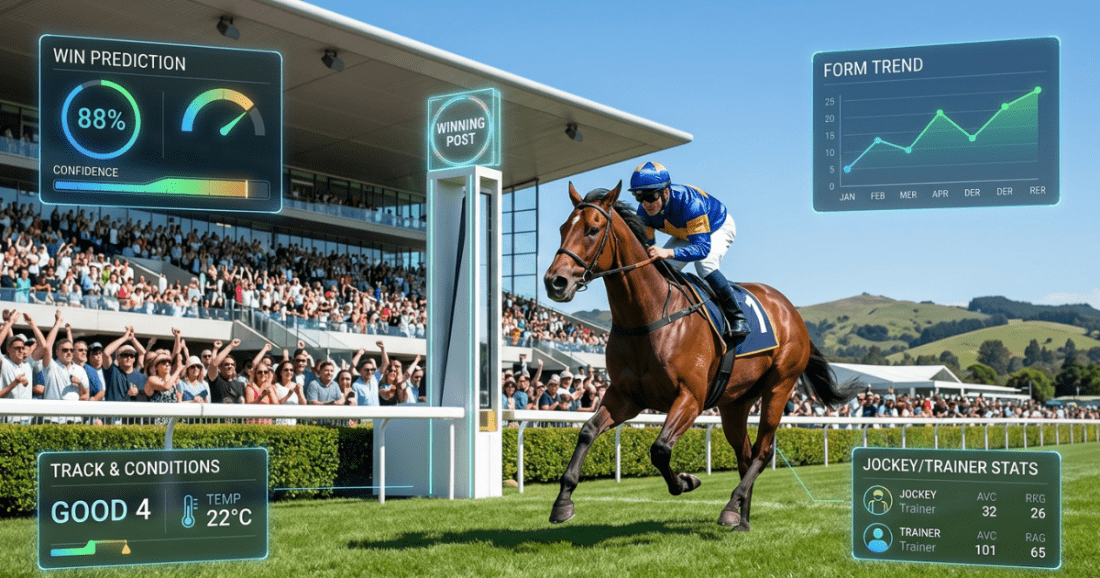
For decades, picking winners in New Zealand thoroughbred racing has relied on the same ingredients: a form guide, a sharp eye, a bit of track knowledge, and more than a little luck. The best punters develop an intuition — a feel for when a horse is ready, when a trainer has found the right race, […] SolidSmack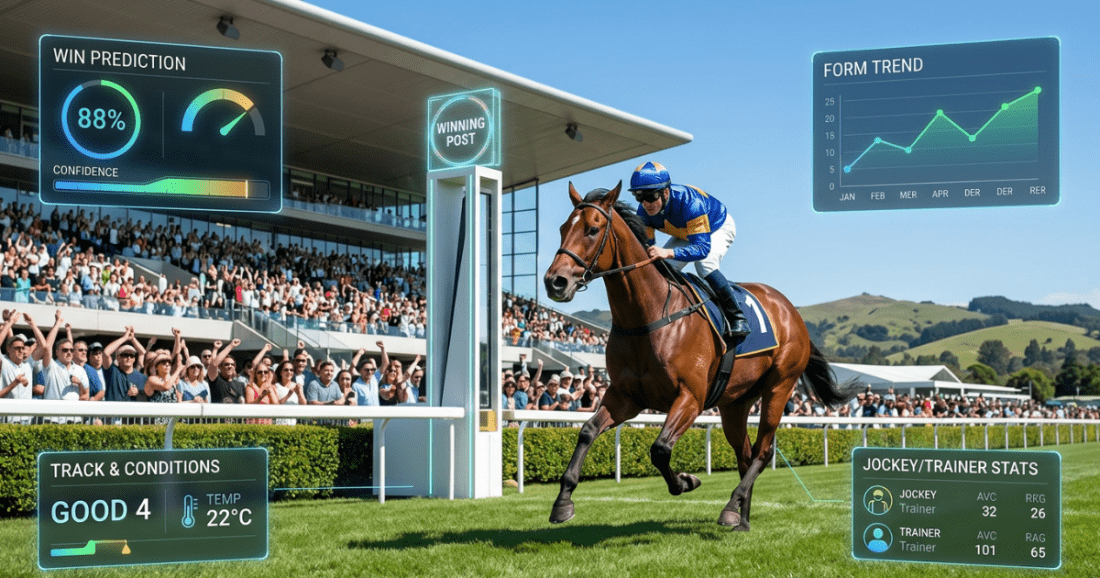
For decades, picking winners in New Zealand thoroughbred racing has relied on the same ingredients: a form guide, a sharp eye, a bit of track knowledge, and more than a little luck. The best punters develop an intuition — a feel for when a horse is ready, when a trainer has found the right race, when the track conditions suit.
But intuition has limits. A human brain can hold maybe a dozen variables at once. The average NZ gallops meeting involves dozens of horses, multiple jockeys and trainers, shifting track conditions, sectional times, barrier statistics, and form cycles that span months. Even the sharpest punter leaves money on the table — not because they’re wrong, but because they can’t see the full picture.
That’s where AI enters the picture.
What AI Brings to NZ Racing Analysis
Machine learning isn’t new to horse racing. Global platforms like Horse Racing Nation and Timeform have used statistical models for years. But most of those systems are built on large overseas datasets — American, British, Australian — and adapted for New Zealand as an afterthought.
The problem is that NZ racing is genuinely different. Smaller fields. Fewer meetings. Track conditions that shift rapidly. Jockey and trainer patterns that don’t mirror international form. An AI model trained mainly on UK data doesn’t understand why a horse that ran well at Riccarton might struggle at Te Rapa, or why a particular barrier at Awapuni has historically underperformed on a Soft 6.
The solution is a model trained exclusively on NZ data.
The Data Behind the Predictions
A purpose-built NZ racing AI ingests thousands of variables per race. Not just the obvious ones — barrier, weight, recent form — but the patterns that human handicappers rarely have time to quantify:
Sectional times — how a horse finished its last 200m and 600m relative to the field average, not just its final placing.
Barrier performance by track and distance — whether barrier 3 at Trentham over 1600m is statistically different from barrier 3 at Riccarton over the same trip.
Going condition history — how individual horses perform on Good, Soft, and Heavy tracks, segmented by surface type.
Trainer and jockey patterns at specific tracks — not just their overall strike rate, but how they perform at each venue.
Class transitions — how horses stepping up or down in grade have historically fared in comparable races.
Racing weight changes — the difference between allocated weight and actual weight carried, factoring in apprentice claims.
The model doesn’t guess. It learns from tens of thousands of historical NZ race results — every runner, every placing, every margin — and identifies the combinations of factors that have historically predicted success.
Why Track Conditions Matter More Than Most Punters Realise
One of the most striking findings from AI analysis of NZ racing data is how powerfully track condition influences outcomes — and how inconsistently individual horses handle it.
Take a typical midweek field at Otaki. On a Good 4, the favourite might have a career record of 3 wins from 7 starts on Good tracks. But dig deeper, and you might find those three wins all came on Good 3 or firmer — and that horse has never placed on a Soft or Heavy surface. Meanwhile, a 15-1 chance in the same race has run four of its best five career races on rain-affected ground.
Most punters glance at the track condition and adjust their thinking by a notch or two. The model quantifies it, learns from it, and applies that learning across thousands of horses.
What About Value?
This is where AI changes the game for NZ punters.
It’s one thing to pick winners. It’s another thing to pick winners at the right price. A good prediction system doesn’t just rank horses — it estimates probability. When the model gives a horse a 25% chance of winning, and the TAB fixed odds imply a 12% chance (roughly $8.00+), that’s a value opportunity.
This is Expected Value (EV) betting — the same concept professional poker players and sports bettors use. You don’t need to win every race. You need to place bets where the true probability exceeds the market price.
AI excels at this because it’s emotionless. It doesn’t fall in love with a horse’s name, or get swayed by a flashy last-start win, or overcorrect after a bad beat. It processes the data, estimates the probability, and lets the maths speak.
The Human Element Still Matters
AI isn’t replacing the punter’s judgment — it’s augmenting it. The best approach combines AI-generated probabilities with your own knowledge of the sport. You might know that a certain trainer targets this specific meeting every year, or that a jockey has a strong book of rides today. The model doesn’t capture everything.
But what the model does capture — the statistical patterns across 100,000+ historical runs — is information no human can hold in their head. Use both, and you’re playing with a material advantage.
Getting Started With AI Race Predictions in NZ
Several platforms now offer data-driven NZ racing insights. One that’s built specifically for New Zealand gallops is Winning Post — an AI prediction engine trained exclusively on NZ racing data. It covers all NZ thoroughbred meetings, generates win and place probabilities, and highlights value opportunities based on expected value.
The service is currently in private beta, with a free trial available for punters who want to test whether AI can sharpen their edge.
Whether you use Winning Post, build your own models, or simply pay closer attention to sectional times and track-condition splits, the direction is clear: NZ racing analysis is going through a data revolution. The punters who adapt will be the ones holding the tickets at the pay window.
*(This article is for informational purposes only. Horse race betting involves financial risk. Please gamble responsibly.)*